

Thailand
🏛️ Capital: Bangkok
👥 Population: 71.7 million
💬 Language: Thai
💰 Currency: Thai baht
✈️ Reasons to travel: Beautiful beaches, Tasty food, Rich culture, Affordable prices, Friendly people
📈 High Season: November to March
📉 Low Season: May to October
☀️ The warmest month: April
❄️ The coldest month: December
🌧 The rainiest month: September
Safety
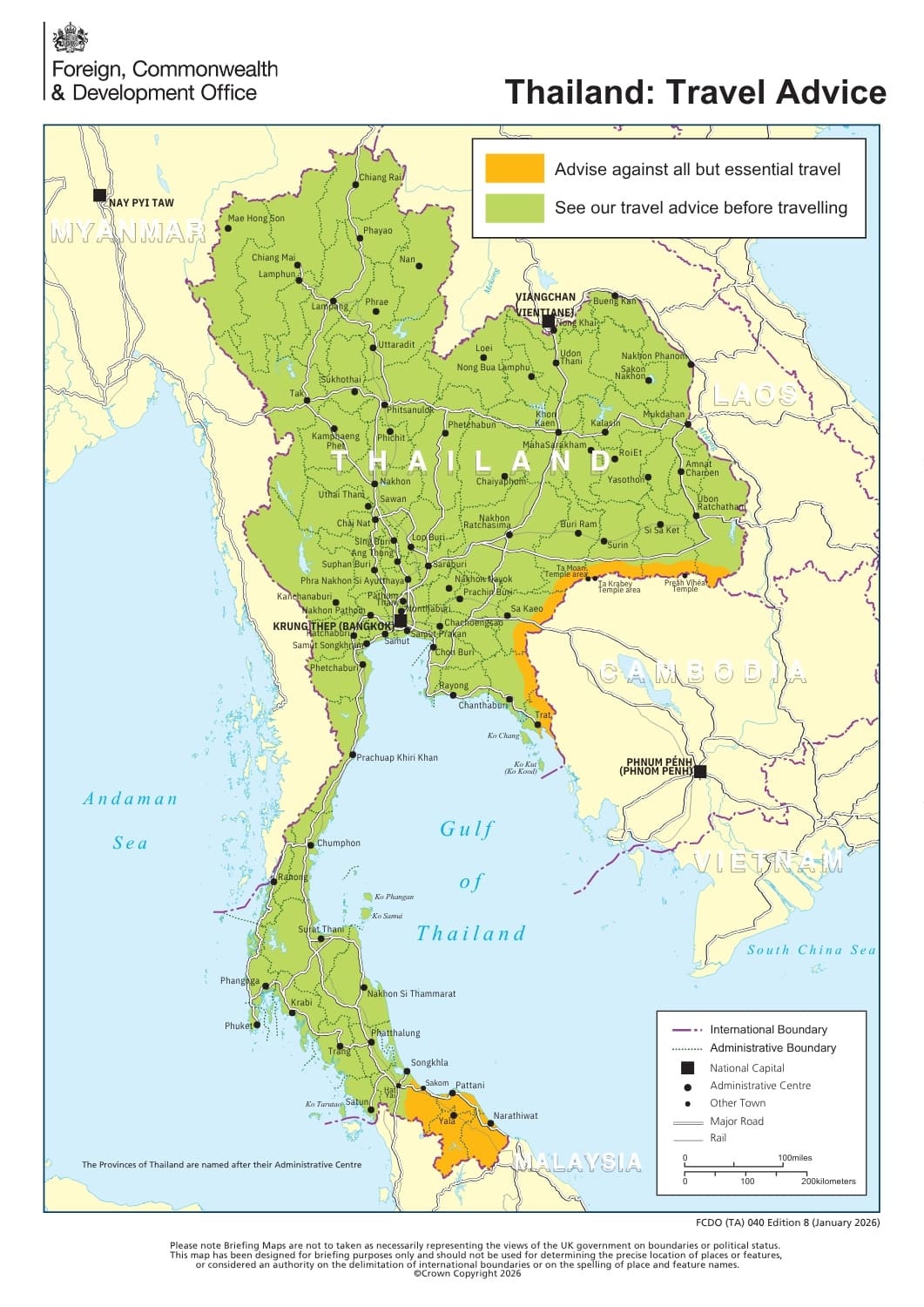
Travelers should check government safety advisories before any trip to avoid dangerous situations. These sources offer reliable updates on security risks, health alerts, and local laws.
Check out the travel advisory from at least one of these government websites:
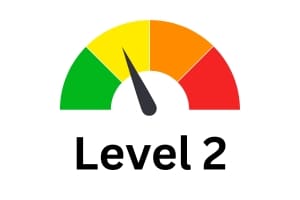
Average safety level:
Exercise increased caution
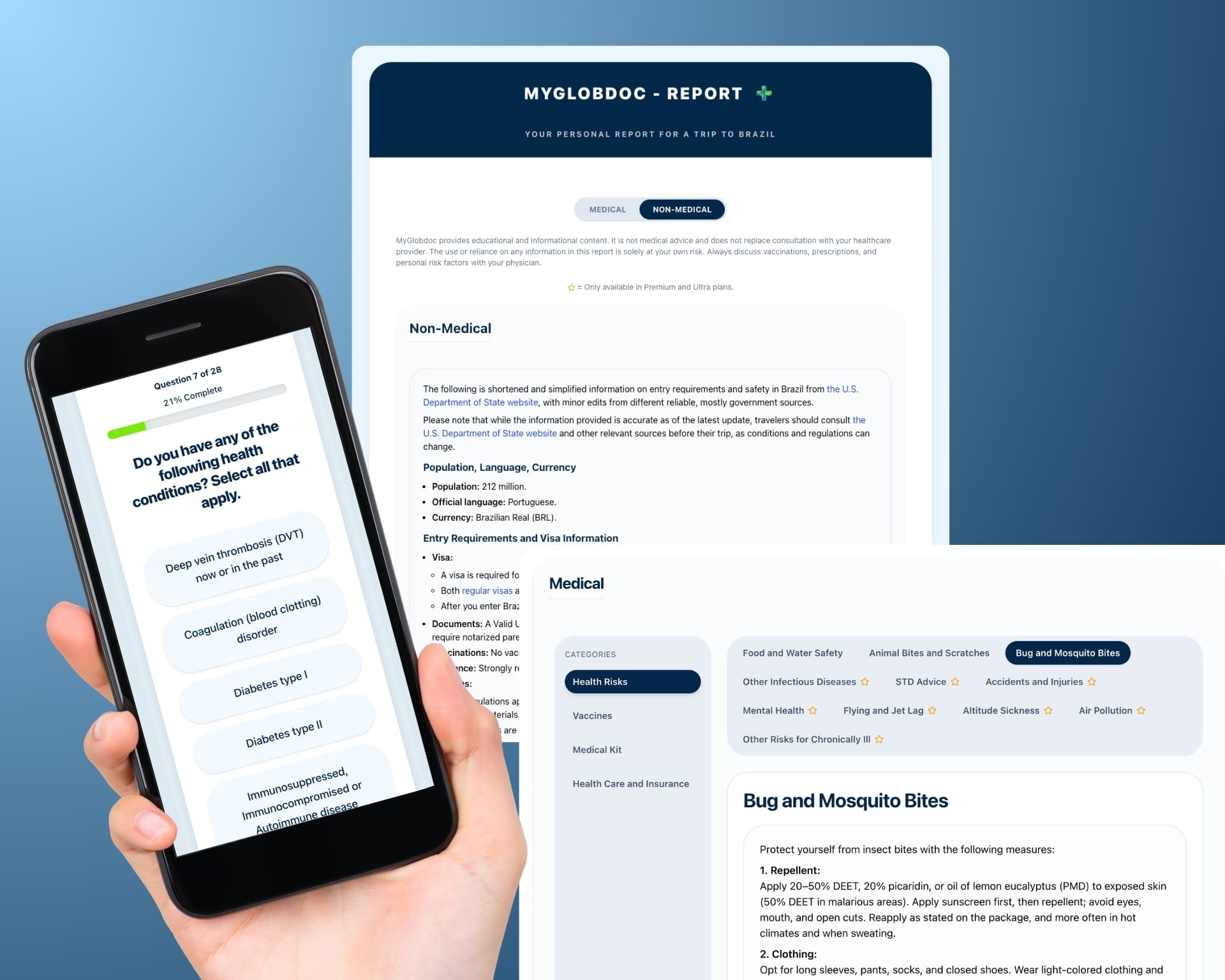
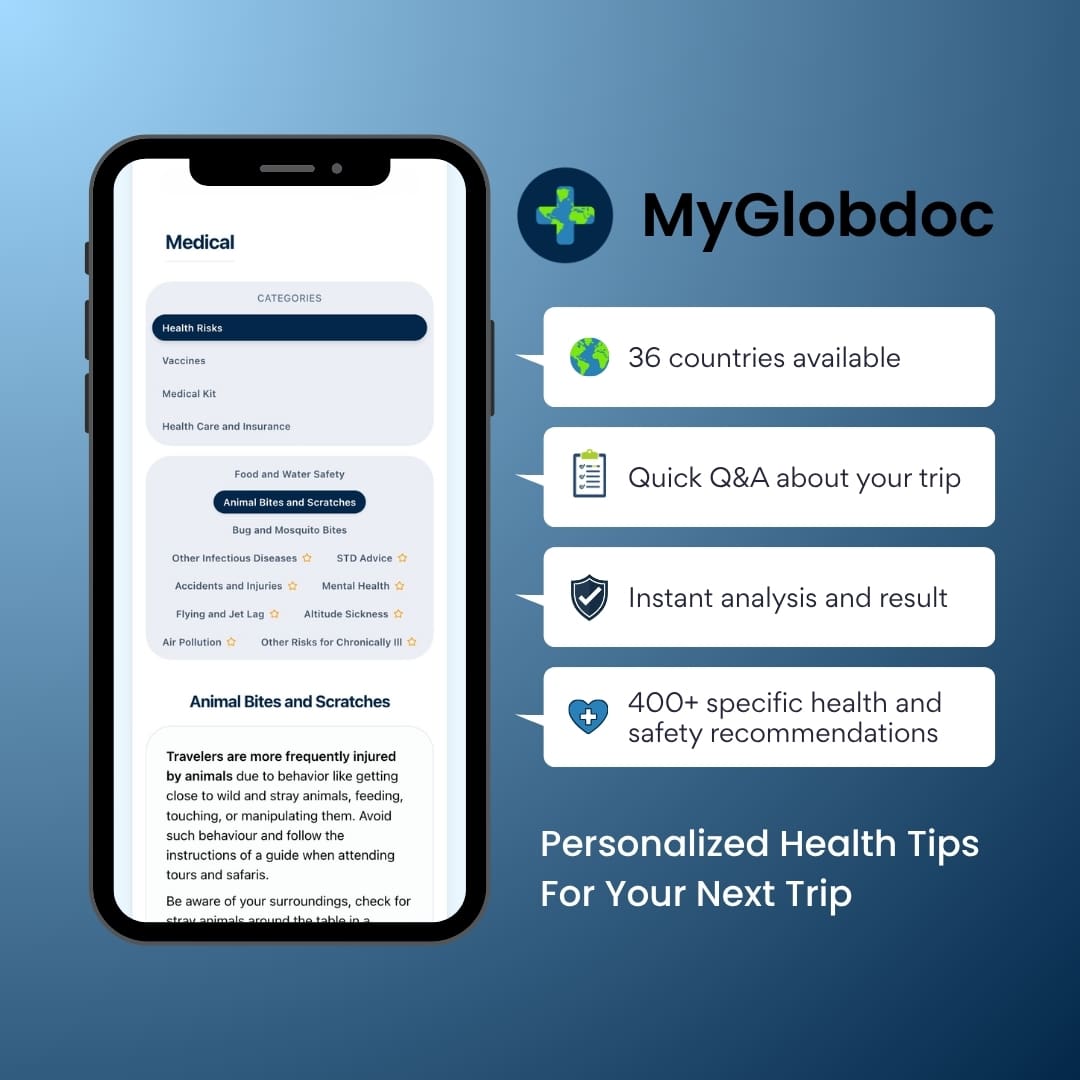
Try our travel preparation app for free, and get an overview of safety, entry requirements, local laws, contacts for hospitals, and more.
Health
Sanitation and drinking water:
Score: 51/100
Rank: 98th/180
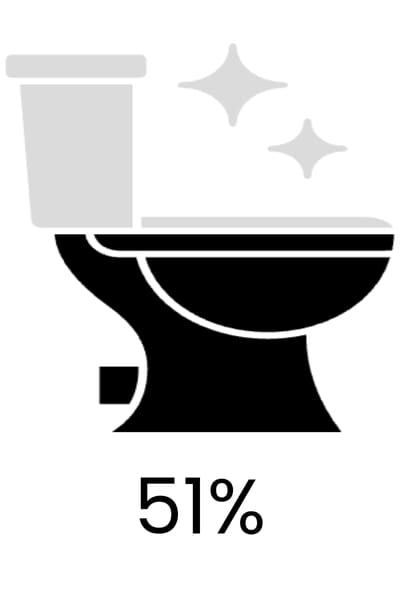
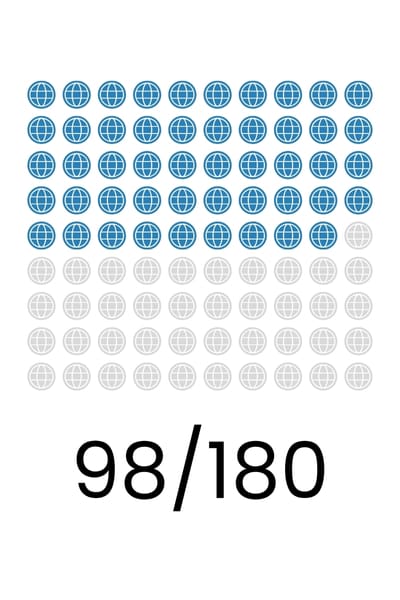
These are based on indicators such as types of facilities and sewage systems in households, water sources, water treatments, etc. The higher the score the safer the drinking water and sanitation (based on the Environmental Performance Index from Yale University).
A lower score may suggest a higher risk of food-borne illnesses like traveler’s diarrhea.
Vaccine-preventable infectious diseases in Thailand:
- Chikungunya
- Dengue fever
- Hepatitis A
- Hepatitis B
- Japanese encephalitis
- Meningococcal meningitis
- Rabies
- Tuberculosis
- Typhoid fever
Infectious diseases in Thailand with no vaccine currently available:
- Cutaneous larva migrans
- Leishmaniasis
- Malaria
- Schistosoma
- Scrub typhus
- Zika

Yellow fever certificate requirements:
A vaccination certificate is required upon entry if arriving from a country at risk, or after transiting for more than 12 hours at a country at risk.
Would you like to learn more about Thailand?
Use our app to find important information about relevant vaccines, what medication to pack, and how to address risks at your destination, so you can enjoy your travel to the fullest.
We’ve connected data from hundreds of scientific publications with the most recent recommendations from the world’s top authorities, including the WHO, the American CDC, and the UK’s NHS, to help you get the best preparation for the trip possible.
Try MyGlobdoc now! Thailand is already available there.
Thailand FAQ
Is it safe to travel to Thailand in terms of health risks?
Yes, Thailand is generally safe for travelers, but certain health risks vary by region. Urban areas, such as Bangkok and Chiang Mai, offer modern healthcare, whereas rural zones may expose you to mosquito-borne illnesses and limited medical access. Basic precautions, such as vaccinations and food hygiene, can significantly reduce your health risks in Thailand.
What vaccinations do I need before traveling to Thailand?
Recommended vaccines for travelers to Thailand include hepatitis A, typhoid, and tetanus. Depending on your planned activities and locations, additional vaccines such as Japanese encephalitis, rabies, and hepatitis B may be recommended. Routine vaccines should also be up to date. It’s best to consult a travel health professional at least four to six weeks before departure. You can use our personalized travel health tool, MyGlobdoc, to assess your specific needs.
Are there any common diseases in Thailand that travelers should know about?
Yes. Common travel-related illnesses in Thailand include dengue fever, typhoid, hepatitis A, and traveler’s diarrhea. In specific regions, Japanese encephalitis and malaria may also be concerns. Mosquito protection and careful food and water hygiene can significantly reduce your risk.
How can I avoid food poisoning or traveler’s diarrhea in Thailand?
Stick to freshly cooked foods, avoid raw seafood and undercooked meat, and choose busy, well-reviewed food stalls or restaurants. Drink only sealed bottled water, and avoid ice unless you’re certain it comes from a purified source. Hand hygiene with soap or sanitizer is also essential.
Is malaria a risk in Thailand, and do I need anti-malarial pills?
Malaria is not a significant risk in cities or popular tourist destinations, such as Phuket or Bangkok, but it is present in some forested and border areas. If you’re trekking or visiting rural provinces near Cambodia or Myanmar, anti-malarial medication may be recommended. A tailored travel health risk report can help determine if you need malaria prophylaxis based on your itinerary.
What mosquito-borne illnesses are present in Thailand?
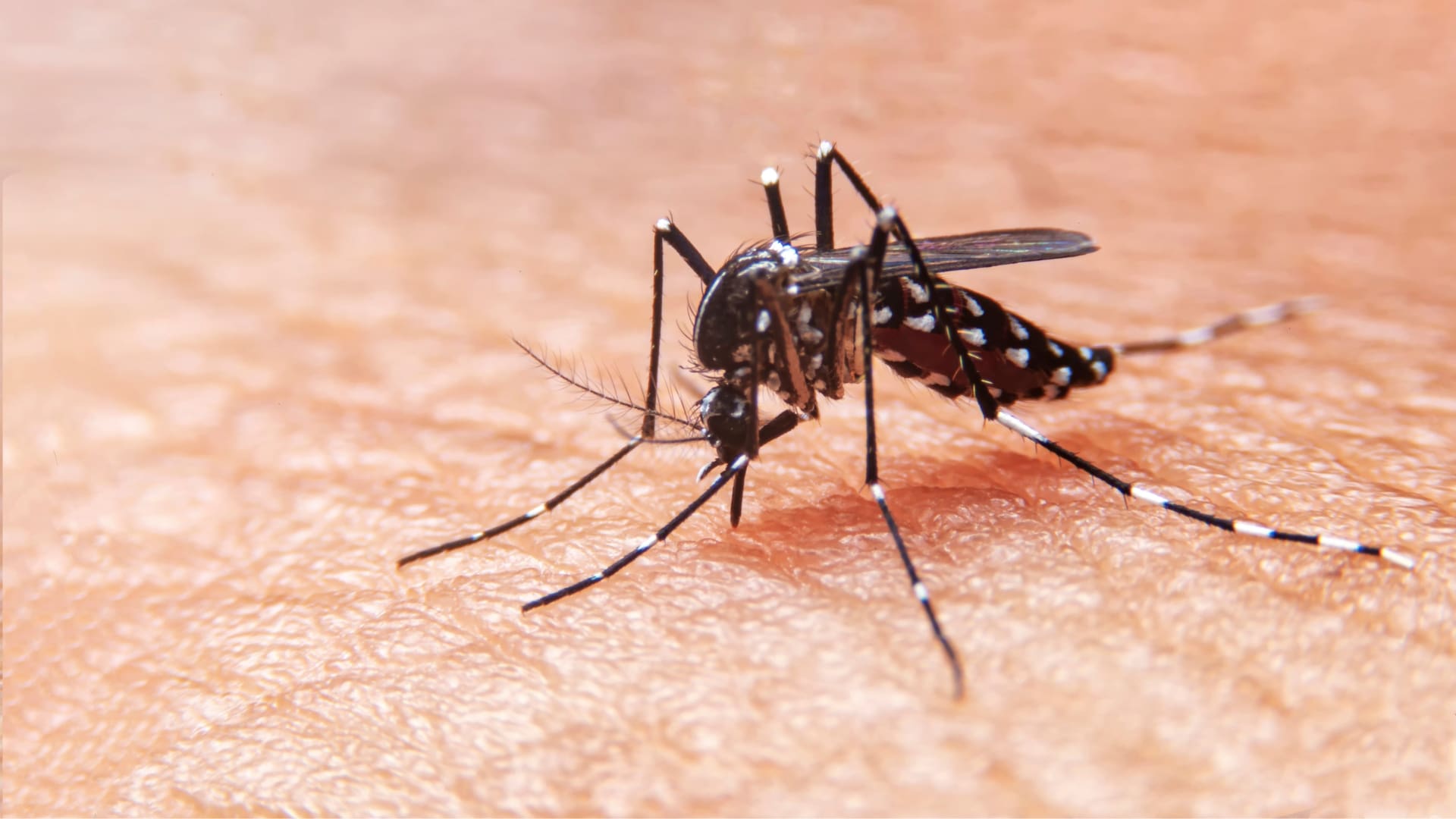
Dengue fever, Zika virus, chikungunya, and malaria (in some regions) are transmitted by mosquitoes in Thailand. These diseases are more prevalent during the rainy season. Use insect repellent containing DEET, wear long-sleeved clothing, and sleep under a mosquito net in high-risk areas.
Do I need travel health insurance for Thailand?
Yes, travel health insurance is strongly recommended. Thailand offers excellent private healthcare, but it can be expensive for foreigners. Insurance ensures access to quality care without unexpected expenses, especially in emergencies.
What should be in a travel medical kit for Thailand?
Include essentials such as oral rehydration salts, anti-diarrheal medication (e.g., loperamide), insect repellent containing DEET, sunscreen, pain relievers, and adhesive bandages. Bring enough of any prescription medications and a basic first-aid kit. A custom checklist tailored to your activities and regions visited can be created using MyGlobdoc – travel health preparation app.
How can I stay healthy while backpacking through Thailand?
Stay hydrated, protect yourself from mosquito bites, wash your hands regularly, and avoid street food that appears unhygienic. Take breaks during outdoor activities in the heat and ensure you’re vaccinated before departure. A well-stocked medical kit will help you manage minor illnesses while traveling.
Is Thailand safe for pregnant travelers or travelers with chronic illness?
Thailand can be safe for pregnant travelers and those with chronic conditions, but planning is key. Pregnant individuals should avoid areas with Zika risk and consult their healthcare provider before travel. Carry a letter outlining your medical needs, medications, and ensure your travel insurance covers pre-existing conditions.
What should I do if I get sick in Thailand?
Thailand has many reputable clinics and hospitals, particularly in major cities like Bangkok, Chiang Mai, and Phuket. For minor issues, pharmacies are widely available and well-stocked. In the event of a serious illness, seek care at a private hospital and contact your insurance provider.
What travel health documents or certificates are required for Thailand?
No specific health certificates are required for most travelers. However, if you’re arriving from a country with yellow fever risk, proof of yellow fever vaccination is mandatory. Always check updated entry requirements and health advisories before departure.
Sources
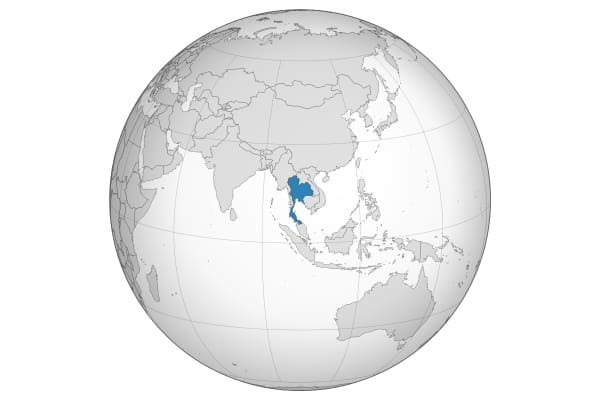
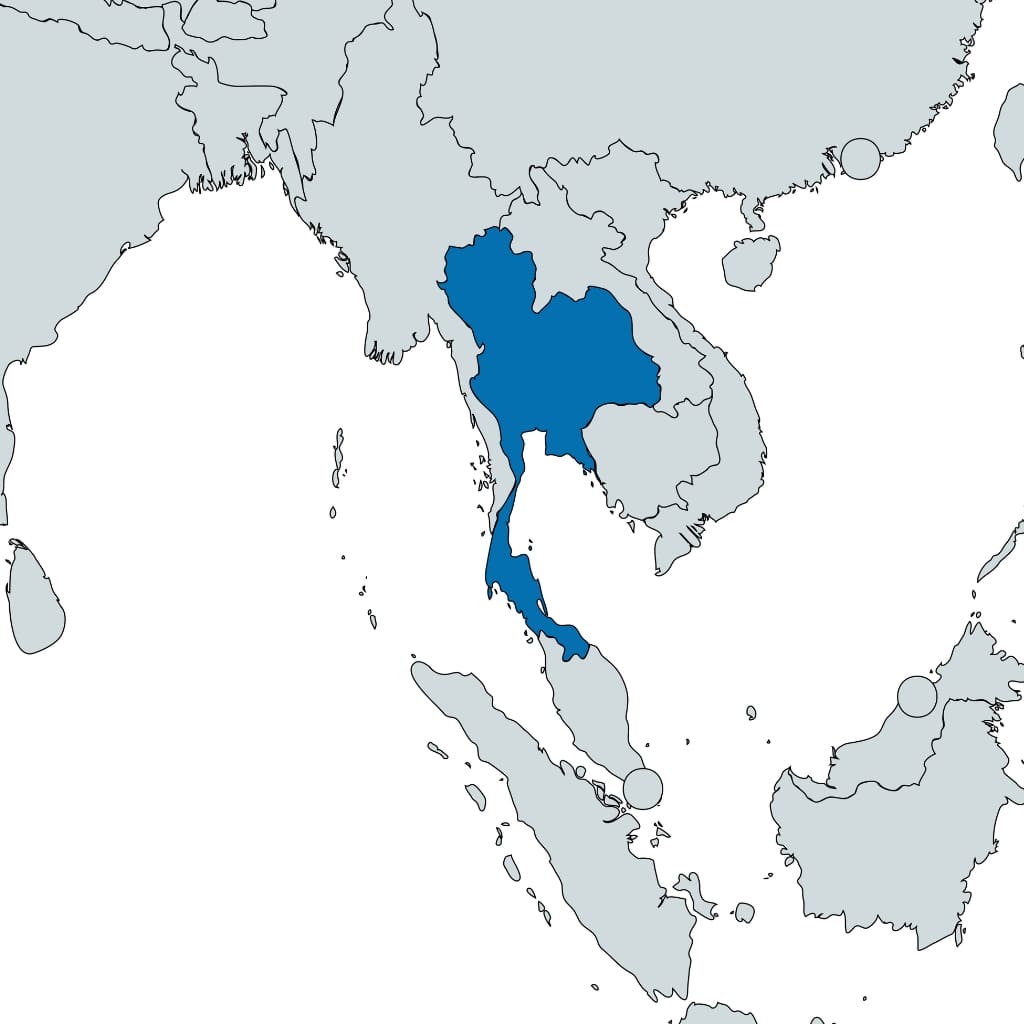
Map generated with https://www.mapchart.net/index.html
https://commons.wikimedia.org/wiki/File:Thailand_(orthographic_projection).svg Orthographic map of Thailand, Zuanzuanfuwa / CC-BY-SA-3.0 edited in Canva
https://datatopics.worldbank.org/world-development-indicators/
https://en.wikipedia.org/wiki/Thailand
https://travel.state.gov/content/travel/en/international-travel/International-Travel-Country-Information-Pages/Thailand.html
Contains public sector information licensed under the Open Government Licence v3.0
https://www.gov.uk/foreign-travel-advice/thailand
https://travel.gc.ca/destinations/thailand
https://www.smartraveller.gov.au/destinations/asia/thailand
Block, S., Emerson, J. W., Esty, D. C., de Sherbinin, A., Wendling, Z. A., et al. (2024). 2024 Environmental Performance Index. New Haven, CT: Yale Center for Environmental Law & Policy. https://epi.yale.edu
Disclaimer:
The information provided on this page is for general informational and educational purposes only and is not a substitute for professional medical advice. Always consult your physician or other qualified healthcare provider with any health problem. The use or reliance on any information provided on this page is solely at your own risk.

Subscribe To Our Newsletter
More From Blog
Motion Sickness and How To Handle It
Manaslu Circuit Trek 2026 Guide (Route, Costs & Tips)
Blood Clots and Long Flights: What Travelers Must Know
Popular topics
Tags